Move in. Start the record.
Add your housemates, deposits and shared belongings. Give everyone the same starting point.
The keys change hands. Clarity begins.A little clarity for shared living
The bills. The sofa. The deposit.
One shared record that makes
sense of it all,
even when someone moves on.
01 / A home with a memory
From the first set of keys to the last meter reading.
Everything belongs to the address, so nothing gets lost in the
handover.

Add your housemates, deposits and shared belongings. Give everyone the same starting point.
The keys change hands. Clarity begins.Keep bills, repairs and condition photos together as everyday life happens.
Work through the settlement line by line. The next housemate arrives to a history that makes sense.
New housemate. Same shared record.02 / The details make the difference
The awkward parts of sharing a home,
made a little less awkward.
Condition photos stay with the house record, visible only to its authenticated members.
A new housemate’s furniture buy-in reflects what things cost and how much useful life is left.
Generate a paid settlement statement with agreed items and disputed lines clearly separated. A PDF, ready to share.
03 / Inside the app
Real screens from Turnover, filled in with an example house. Pick a step to see it.
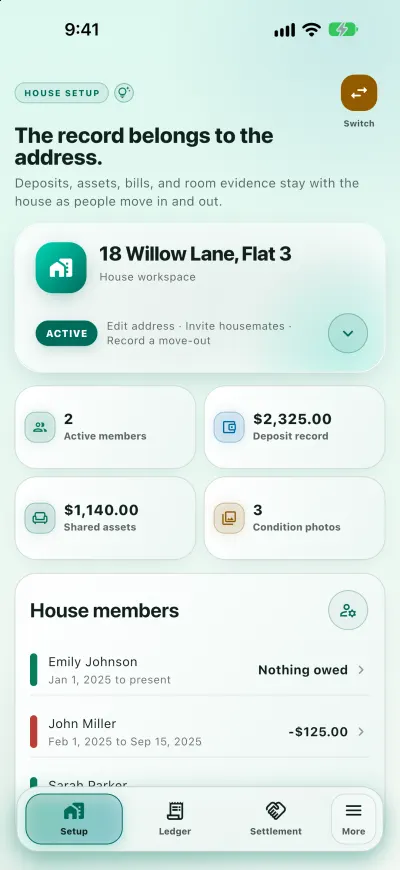
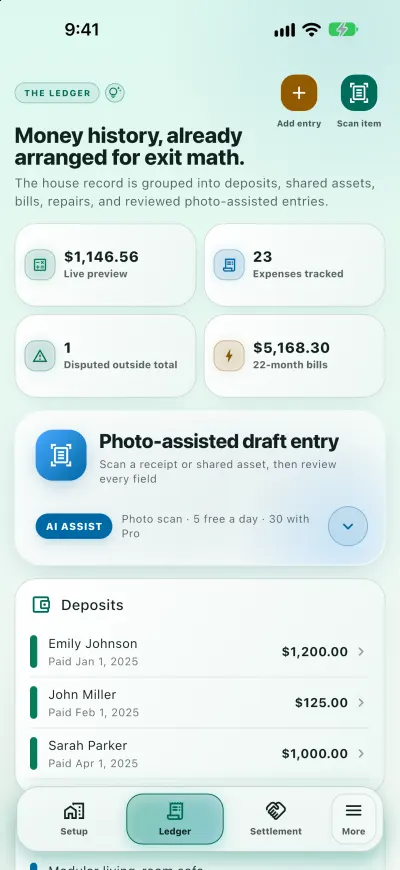
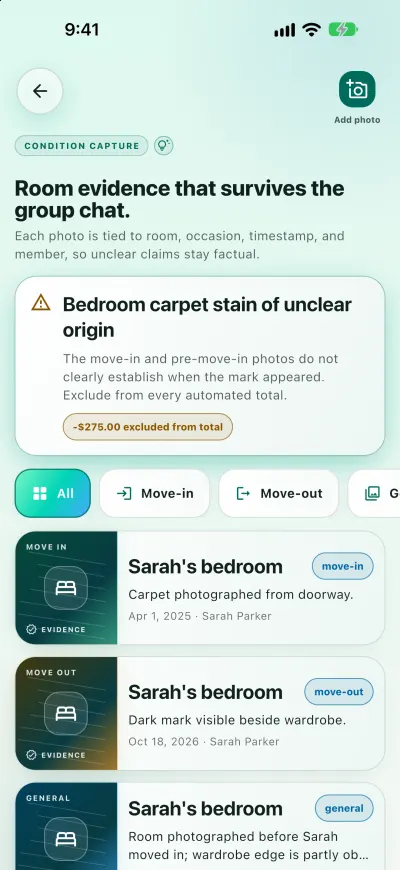
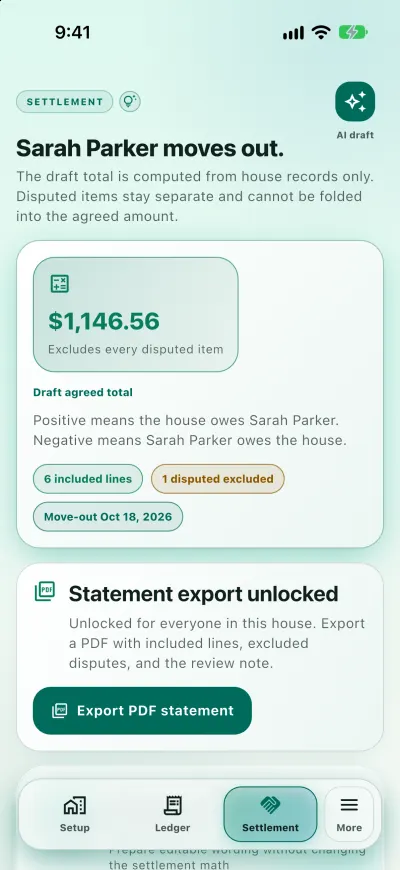
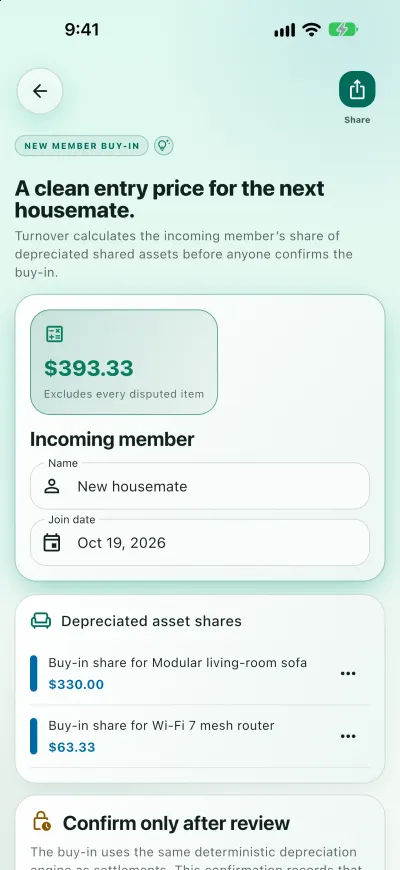
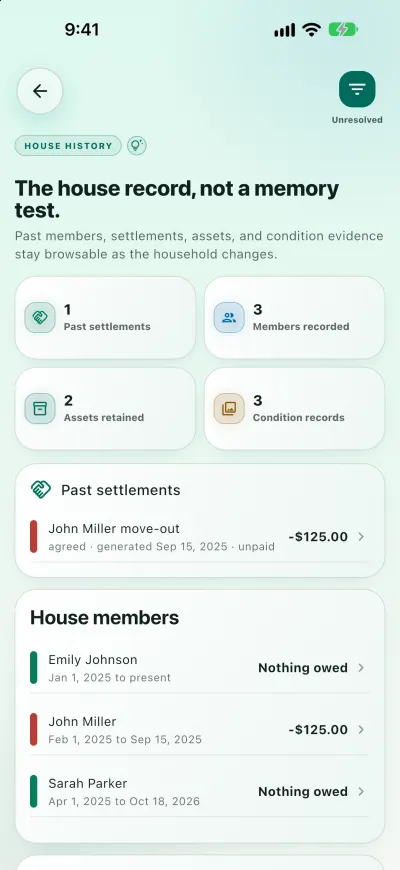
Example house. Not a real household.
04 / Questions, answered
A shared record for the people living in a house: deposits, shared furniture, bills, repairs and condition photos, all kept with the address. When someone moves out, Turnover works out a settlement from that record instead of from memory.
No. It is not a bank or a payment service. Turnover shows who owes what; settling up happens between you, in whatever way you already pay each other.
From the house record, one line at a time: what is left of the departing member's deposit, their share of shared furniture that stays with the house (based on how much useful life is left), bills split by the exact days they lived there, and repairs someone else paid for. Every line shows its working.
Mark it as disputed. It stays visible, with its photos and notes, but it is kept out of the agreed total, so one disagreement does not hold up everything else.
Only members of that house, including people who have moved out, since the history is theirs too. Condition photos are stored privately, not at public links.
Share an invite from Setup. Each invite is a single-use link that expires after 7 days, and the person joining sees the address before they accept.
No. Scanning a receipt or drafting a settlement message is optional. The first time you use each one, Turnover names the AI provider it uses and asks before anything is sent, and you can always enter things yourself.
Keeping the record, logging costs, condition photos and the settlement itself are free, with 5 receipt scans a day. A settlement pass unlocks the PDF statement and message drafts for one move-out. The house plan covers everyone in the house, adds statements for every move-out and raises scans to 30 a day. Prices are shown in the App Store before you buy.
Turnover records that your house agreed; it does not verify signatures, collect payment or give legal advice. It is a clear, shared reference, not a court document.
Your login and personal profile are removed. Shared records you added stay with the house so your housemates keep their history, though names in them may still identify you. Store subscriptions have to be cancelled in the App Store.
Something else? Ask us or read the privacy policy and terms.

For the place you share
Make room for the good parts of living together.
By downloading, you agree to our Terms and Privacy Policy.
Have a question? Let’s talk